



Every now and then, you come across a winery that blows you away, and Scilly’s Mandrarossa does just that. It isn’t just that their wines are amazing, but the combination of excellence, value, and excitement is so unexpected.
Traditional whites like the crisp, yet full-flavoured, Mandrarossa Fiano and the Mandrarossa Grillo offer style and substance, while their reds showcase their innovative abilities. The Mandrarossa Frappato is a joyous red and black berry wine that’s the perfect summer sipper, the Mandrarossa Syrah is classy and complex, while the Timperosse Petit Verdot is a must-try for Bordeaux lovers. Plump, velvety and loaded with plums, cherries and blackcurrant with a satisfying, earthy and spicy finish, it’s brilliant and a bargain.
I was so impressed by their wines that I got in touch with Mandrarossa President, Giuseppe Bursi, to discover the secret of their Scillian success.
Q. First off, I love your wines. What made you want to open a winery?
Thank you so much! Opening a winery is driven by a passion for cultivating distinctive, high-quality wines and sharing that experience with others, often combining a passion for nature and agriculture with creative spirit and energy. It allows the winegrowers of our community to believe in our brand, enjoy a lifestyle change, and build a lasting link from vineyards to bottle and markets.
Q. How would you sum up your winemaking philosophy?
In this winemaking philosophy, patience, listening, and an outlook toward the potential of each vineyard play an important role. The aim is to craft wines that not only respect the environment but also showcase the unique characteristics of each grape variety. A massive scientific approach is applied at every step of the production process. The winegrowers and a team of s winemakers engage in a dynamic exchange, fostering a constant flow of knowledge and expertise.
Q. A revelation for me has been the quality/value of your wines, both of which are exceptional. Most striking has been the quality of the whites. The purity, complexity and energy have been breathtaking. What is it about Sicily that makes it so good for whites?
Thank you so much again! Sicily is ideal for white wines thanks to a unique terroir, characterised by a mild climate, 300 days of sun per year, tempered by sea breezes, significant temperature variations, and varied soils (volcanic, clay, and limestone). These factors, combined with the rich variety of native grape varieties such as Grillo, Catarratto, and Grecanico, yield white wines with remarkable freshness, flavour, minerality, and aromatic intensity.
Tasting Note: Mandarossa Grillo

Grillo is a traditional Sicilian white grape that’s known for producing crisp, clean wines with refreshing acidity. The Mandarossa Grillo displays these characteristics in harmony with richer, softer fruit tones and tropical fruit, melon, star fruit, and papaya. Toward the finish, savoury tones of herbs, minerals and salinity add further interest.
Q. Sicilian wines, at least those that have reached the UK, have changed massively over the years. 20 years ago, it was mainly heavy reds. What’s prompted the surge in quality, do you think? Is it a better understanding of soils/terroir, investment in the industry or something else?
A. A better understanding of the soil-terroir and investments has certainly improved the quality of wines. But that's not all. Today, there's a greater focus on sustainability, territorial identity, market trends, and climate change, which leads to the production of fresh, minerally wines with low alcohol content.
Tasting Note: Mandrarossa Frappato
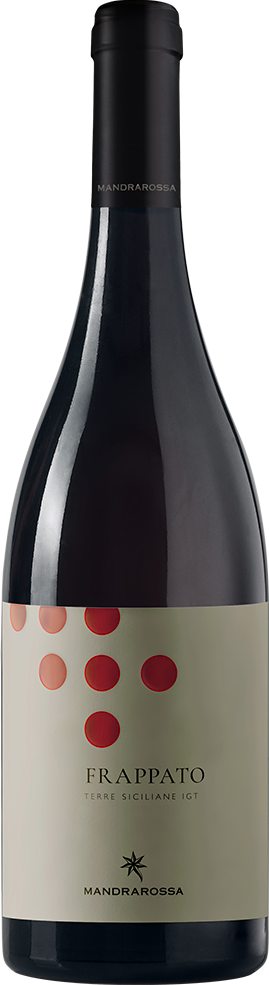
Another native of Sicily, Frappato tends to produce light, red berry-driven wines that can be served lightly chilled. The Mandrarossa Frappato has a good deal more body, intensity and character than most. Cherry and raspberry flavours flood the palate with underlying notes of spearmint, white pepper and beetroot. With air it puts on weight, but remains clean, lithe and delicious.
Q. Climate change is a big issue for winemakers throughout Italy. I’ve spoken to producers in Piemonte, Veneto, Tuscany, and Puglia, all of whom have said it’s affecting the way they work. Being an island, is Sicily protected from this to some extent?
A. No, Sicily is not protected; it is one of the most vulnerable areas in Europe. The climate crisis intensifies extreme droughts, with 70% of the territory at risk of desertification by 2030, rising sea levels, and threats to agriculture. Its insularity amplifies heat and drought. Our island, far from being protected, is facing a climate crisis that is accelerating desertification and the loss of biodiversity and water resources.
Q. You seem to champion local grapes. Is that because they are simply the best ones for your soils, or is it a way to differentiate your wines from others in the market?
A. The choice to give great importance to indigenous grapes is usually both, but with a very clear hierarchy: the land and history come first, the market comes second. A local grape variety tells the story of the territory in a way that an international grape variety cannot. In the global wine market, the real wealth is diversity. A native grape variety makes the wine unique. It cannot be replicated elsewhere and tells the story of tradition, the culture and identity of a place, standing out from "standardised" wines, and offering to the consumer an authentic experience. Local grapes are an authentic expression of the terroir, and this automatically leads to market distinction. If we only made "market-friendly" wines, we would lose the soul of our land.
Q. You also have some interesting ‘international’ varieties, Syrah, Viognier, and Petit Verdot. What made you want to produce these? Petit Verdot isn’t the most common of varietal wines, and it certainly doesn’t have the consumer recognition of Cabernet or Merlot. It’s a bold choice, and I’d be curious to know why you make it. Is it right vine, right place?
A. The decision to grow international grape varieties such as Syrah, Viognier, and especially Petit Verdot comes from the desire to explore new expressive frontiers, betting on our territory's ability to interpret noble varieties in a unique way. Don’t forget that Mandrarossa’s payoff is “the Unexpected Sicily”. We decided to produce Petit Verdot after years of experimentation in the vineyard because it is a grape variety that requires warmth and light to mature perfectly. Here in Menfi, it has also found an ideal, Mediterranean climate, which allows it to complete sugar and phenolic ripening, avoiding the herbaceous notes it would have in cooler climates. Although it does not have the fame of other grape varieties, Petit Verdot is experiencing a revival, proving that it can deliver extraordinary results on its own. The challenge is to enhance its 'pure' identity. It represents a bold and memorable excellence, capable of astonishing with its complexity and character.
Tasting Note: Mandarossa Petit Verdot

Petit Verdot is a Bordeaux grape that’s noted for giving wines of deep colour and intense flavours. Both are on show here. Very deep purple, the bouquet is a classic blend of black fruits, violets, sage and smoke. Full and rich, layers of plums, blackcurrants and blueberries are interspersed with tones of liquorice, leather and black pepper. Well-structured and full, there’s none of the hardness one often finds in Petit Verdot; it has a luxurious, polished feel.
Q. Innovation seems to be at the heart of what you do. What’s the driver for this? Is it the pursuit of excellence, sustainability or something else?
A. Innovation is certainly the beating heart of our activity, but defining a single 'engine' for it would be reductive, because it is an interconnection where excellence, sustainability, and a future-oriented vision feed off each other. Innovation allows us to continuously raise the bar for performance, reliability, and user experience. It's the drive to find smarter, faster, and more effective solutions. Sustainability is a key driver. We believe in innovation not just for profit, but to create a positive impact. Sustainable innovation (circular materials, energy efficiency, waste reduction) is no longer an option, but a way to ensure longevity for both the company and the planet. We innovate for excellence, with a sustainable approach, to shape the future.
Q. You make a wide range of wines – I am determined to taste them all! Is this a result of innovation/experimentation, or do you simply have small parcels of vines that give you small batches?
It will be a great pleasure to let you taste them all! This big range is the result of more than 20 years of experiments; in Menfi, there are so many different terroirs, and each one is perfect for the production of 35 different grape varieties, from indigenous to international ones.
Tasting Note: Mandrarossa Fiano

Fiano is well-known in southern Italy and is finding favour as far afield as Australia and California. It seems to like Sicily and, as is their way, Mandrarossa have got the best out of it. Green gold, the nose is an inviting mix of grapefruit, pear, jasmine and lime leaves. Fuller and richer than expected, lovely fresh green and yellow citrus fruit flavours fill the mouth, while an undertow of oregano adds a cleansing savouriness.
Q. What does the future hold for you/Sicilian wines in general?
A. The future of Sicilian wines is moving towards a model of dynamic resilience, where the climate challenge becomes the driver for deep innovation and an even stronger territorial identity. Sicily is responding to rising temperatures and drought through scientific research and new agronomic strategies. The focus is on native grape varieties naturally resistant to heat and on infrastructure investments, such as hillside ponds and reservoirs for water resource management.
Q. Globally, we’ve seen sales falling, consumers wanting low/no alcohol wines and a greater emphasis on drink less, drink better, the latter being the mantra of many Perfect Cellar customers.
A. Our current strategy is strongly focused on premiumization, with the goal of positioning our wines in the most prestigious segments of the global market. This evolution is mainly realised through the Mandrarossa brand, which represents the flagship of our production.
Q. You clearly have the capacity to make wines that can compete with the world’s best. Is that the aim?
A. It is exactly the ambition that drives every one of our harvests. We are convinced that the Menfi and the Terre Sicane District have nothing to envy in the world's most renowned terroirs. Our challenge is to bring Mediterranean elegance to the glass, demonstrating that Sicily can produce wines with a complexity and ageing potential comparable to the great international wines.
Thank you, Giuseppe. Keep up the amazing work.
Giles
Giles Luckett is a freelance wine journalist with columns in Velvet Magazine, Round & About Magazine, and Focus Life Magazine, amongst others. When not writing about wine, Giles works as Perfect Cellar’s Head of Fine Wine Sales.